
Considering moving from Shuttleworth MIS? Plan Your Next Move
A Management Information System can become part of the fabric of a print business. Over many years, processes are developed around it, data accumulates, integrations are created and teams become familiar with how the system works.
For businesses using Shuttleworth MIS, considering what comes next therefore isn’t simply a question of replacing one piece of software with another.
As an established MIS moves through the later stages of its product lifecycle, businesses have an opportunity to consider not only how they protect what already works, but also what they would like their next generation of MIS technology to deliver.
Changing MIS doesn’t mean starting again. Done properly, it should mean taking the valuable parts of your existing operation with you while creating the opportunity to improve what happens next.
Your existing MIS is an investment
The value within your existing Shuttleworth system goes far beyond the software itself.
Over time, your business may have built up years of customer information, estimating data, pricing structures, job histories, stock information, production processes, reporting requirements and working practices.
Your team has invested time learning how those processes work. Your business may also have invested significantly in implementation, consultancy, training and integration with other systems.
That accumulated knowledge has value.
One of the first principles when considering a move should therefore be:
Don’t assume that changing MIS means abandoning everything you’ve already invested in.
The objective should be to understand what needs to be preserved, what can be improved and what no longer needs to be carried forward.
Our White Paper: Planning a Print MIS Migration explores five practical areas to consider before beginning that process.
Start with the reasons for moving
Before looking at replacement systems, establish what is driving the conversation.
Perhaps your existing platform is becoming increasingly difficult to integrate with newer technology. Maybe particular processes still require manual intervention, reporting has become cumbersome, or your business has simply evolved beyond the requirements that existed when the MIS was originally implemented.
For some businesses, the trigger is the changing lifecycle of the software itself.
Whatever the reason, understanding why you’re considering change makes evaluating what comes next much easier.
Our White Paper: Could Your Current MIS Be Holding You Back?, looks specifically at the signs that an established MIS may be reaching the point where businesses should consider their longer-term options.
Protect your data before thinking about migration
Data is understandably one of the biggest concerns for any company considering a change of MIS.
Customer records, historical jobs, estimating information, pricing, supplier information and other operational data may have accumulated over many years.
Before deciding how anything should be migrated, establish:
- what data you currently hold;
- where it resides;
- what genuinely needs to move;
- what needs to remain accessible for historical purposes; and
- how the quality of that data can be checked before migration.
Moving systems can actually provide an opportunity to improve the quality of the information your business relies upon rather than simply transferring everything unchanged.
We’ve explored this subject in more detail in our White Paper: How Safe Is Your Data When Changing MIS?.
Don’t automatically recreate every existing process
One of the easiest traps when changing MIS is trying to reproduce the old system exactly inside the new one.
Some familiar processes will absolutely be worth retaining.
Others may exist simply because they were created around the limitations of technology available many years ago.
A migration provides an opportunity to ask a useful question:
If we were designing this process today, would we still do it this way?
That can uncover opportunities to remove duplicate data entry, reduce manual administration, automate routine activities and improve the flow of information between departments.
The goal isn’t change for the sake of change. It is to preserve what works while identifying where modern technology can make the business more efficient.
Your MIS should adapt as your business evolves
Many print businesses have diversified over time, adding new manufacturing processes, products, services, outsourced operations or even non-print activities. A modern MIS should give you the flexibility to manage those different requirements without forcing them into workflows designed for a different type of production.
Optimus dash is built around your own processes, rules and production logic, allowing different products, manufacturing disciplines and workflows to be managed within the same configurable MIS environment.
Explore how Optimus dash adapts to what you produce →
Integration should be part of the decision from the beginning
Print businesses increasingly operate within connected technology environments.
Web-to-Print, prepress, imposition, production equipment, accounting, CRM, shipping and other specialist applications may all need to exchange information with the MIS.
That makes integration architecture an important consideration when evaluating your next platform.
Rather than asking whether a new MIS can simply replace your existing functionality, consider how effectively it can become the central information platform connecting the wider business.
Our White Paper: Print MIS Integration & Automation examines why connectivity should be considered as part of the MIS decision rather than as an afterthought.
Your people will determine whether the move succeeds
Technology is only one part of an MIS migration.
The people who estimate jobs, manage customers, schedule production, purchase materials, operate equipment, handle accounts and manage the business will ultimately determine whether the new system delivers its potential.
Involving key users early can help identify important requirements and uncover processes that management may not see in everyday operation.
It can also help create ownership of the project.
Training, communication and realistic expectations around implementation should therefore form part of the migration plan from the beginning.
We look at this in our White Paper: Could Your Team Be the Key to a Successful MIS Move?.
Choose the company as carefully as the software
A Print MIS is rarely a short-term purchase.
The relationship with your MIS provider may continue for many years through implementation, support, development, integrations, upgrades and changes within your own business.
When evaluating potential suppliers, consider not only what their software does today but also the organisation behind it.
How well do they understand your sector? How will implementation be managed? What happens when you need support? How does the product continue to develop? And will the supplier work with your business as its requirements evolve?
Our final migration White Paper: What Makes a Great Print MIS Partner?, explores some of the questions worth asking before making that decision.
You don’t have to make the decision all at once
Considering a move from an established MIS can initially feel like a major undertaking.
It becomes much more manageable when broken into stages.
Understand where your business is today. Identify what you want to improve. Review your data. Map your integrations. Involve your people. Then evaluate which technology and supplier best fit where you want the business to go.
The aim shouldn’t simply be to replace Shuttleworth.
It should be to use the opportunity to build a platform capable of supporting the next stage of your business.
Already considering your move from Shuttleworth?
Optimus has been developing Print MIS technology for more than four decades, helping print and packaging businesses manage and connect processes across their operations.
We also recognise that businesses moving from an established MIS have already made a considerable investment in their existing technology, processes and people.
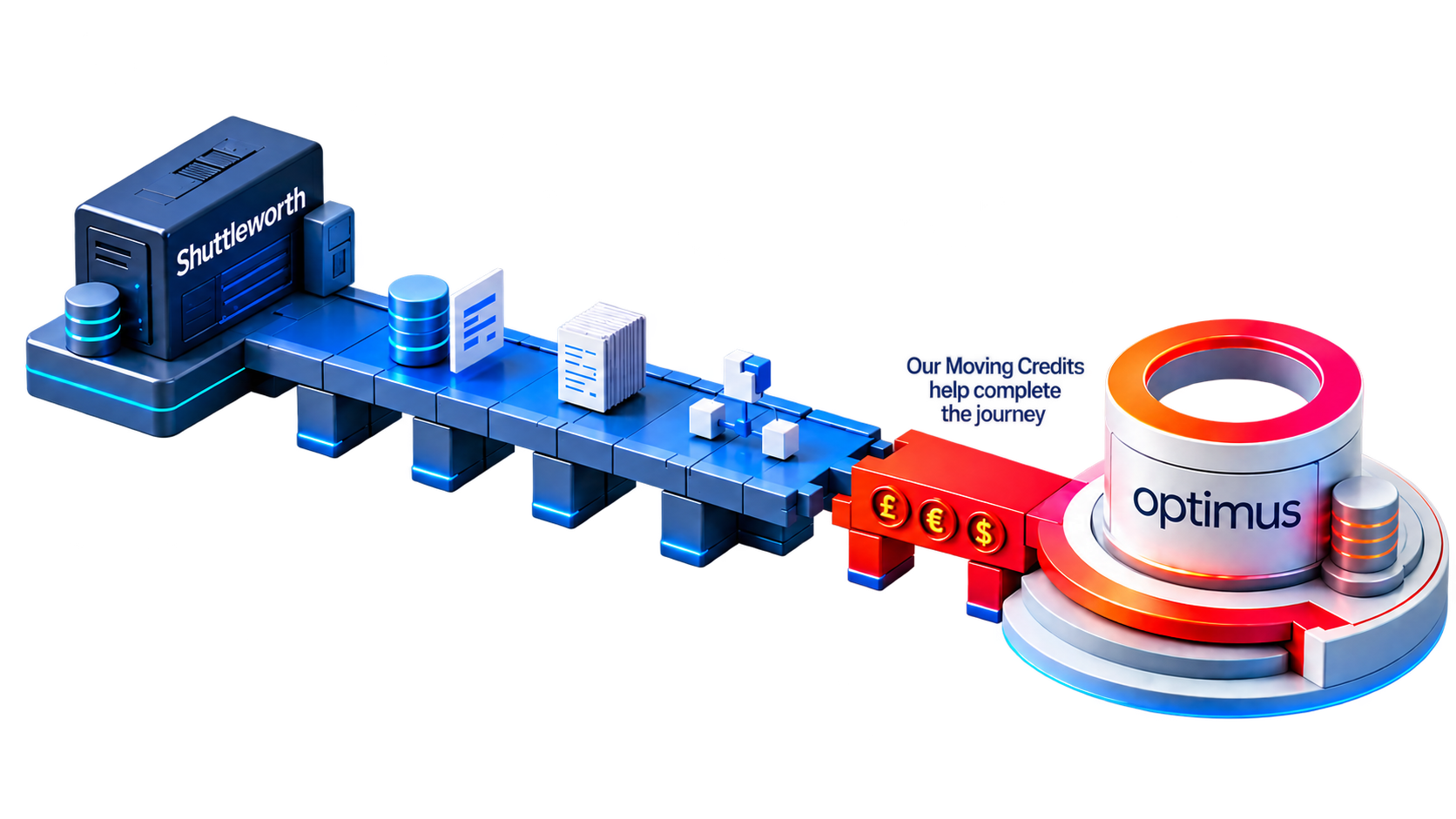
That’s why we’ve introduced: MIS Moving Credits.
For qualifying projects, businesses moving to Optimus can receive £5,000 in Moving Credits off their Optimus MIS project, helping towards the cost of making the transition.
Find out about MIS Moving Credits
Changing MIS should not mean disregarding the investment you’ve already made.
It should be an opportunity to respect the past and upgrade for the future.
Click here to find out about our offer to Shuttleworth Customers
Talk to Optimus
If you’re currently using Shuttleworth MIS and beginning to consider your future options, talk to us about your existing system, your processes and what you would like your next MIS to achieve.
There doesn’t need to be a predetermined solution. A conversation can simply help establish what a realistic migration path could look like for your business.